
Monday, March 2, 2020
Week 9_Kelly Wang_ASA 114
Professor Valverde's chapter on "Social Transformations from Virtual Communities" highlights the beginnings of Vietnamese transnational virtual communities as well as the VNForum's sociopolitical movement: the No-Nike labor rights campaign. The internet and the space and community created by cyberspace is what leads to transnational sociopolitical transformations. Professor Valverde states that "When Viet Nam plunged into the information age, the government restricted websites that presented information deemed dangerous to the Vietnamese state" (p.68). This reminds me much of how knowledge really is power, and those who control knowledge have power over those who are in the dark. You can really see how much the internet and cyberspace has affected the spread of knowledge as well as increased communication, gapping the bridge to build communities from all over the world. You can also see how restricting access to this information can affect communities, with North Korea as an example. Daniel C. Tsang's piece on "Notes on Queer 'N Asian Virtual Sex" touches upon the eroticization of new technology as well as fluid sexuality within virtual reality. Tsang mentions how "As Asians, we resent being treated as objects, or as the "Other," but given the mainstream definition of beauty in this society, Asians, gay or straight, are constantly reminded that we cannot hope to meet such standards" (p. 124) and brings to light the fetishization of Asians today. Tsang also speaks upon API's breaking the silence about taboo sexualities which is key to reconstructing sexual identities.
 https://i.insider.com/518bb0b4ecad04f65d00001a?width=506

Sunday, March 1, 2020
Week 9_Leng Vang_ASA114

From this week reading, Valverde "Social Transformations from Virtual Communities" we see how the age of technology helped Vietnam connect with the world. We see how the VNForum connected Vietnamese from all sides to engage in talks and communications with one another. They were able to rise up together and fight against big companies like the NoNike campaign. However, technology has also allow for chaos to reign because with anonymous functions it allows people to attack each other and name calling.
Why do you think that with the all the good talks that come with forum do people still attack one another through the guise of anonymity?
Kieu-Ling, Valverde. "Social Transformations from Virtual Communities." Transnationlizing Viet Nam.
Week 9_Toan Tran_ASA 114
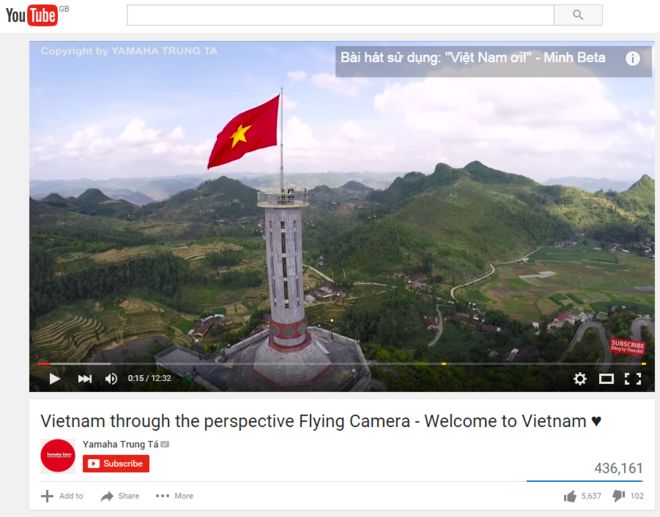
Daniel C. Tsang and Kieu-Linh Valverde, in their work “Notes on Queer ’N’ Asian Virtual Sex” and “Social Transformations from Virtual Communities”, respectively, they both address how the internet has influenced the digital age and cyberspace, through the Bulletin Board System (BBS) and VNForum, respectively (Tsang 118, Valverde 88). The internet has definitely changed how our people within our Asian diaspora communicate and publicize. Often times, the laws in other countries are quite strict when it comes to publicizing the news within them to other countries such as the United States. Stories have been told, including Valverde’s, where people would be fined, jailed, and/or deported for posting something online. For example, people would have their videos removed such as the one shown below. Which is why I now ask:
Q: How can we compromise with other countries and their publicity/freedom of press (or lack of)?
Works Cited:
x
x
Daniel Tsang. “Notes on Queer ‘N’ Asian Virtual Sex.”
Kieu-Linh Valverde. “Social Transformations from Virtual Communities.” Transnationalizing Viet Nam.
Image: https://www.bbc.com/news/blogs-trending-35785996
Week9_Esther Lai_ASA114
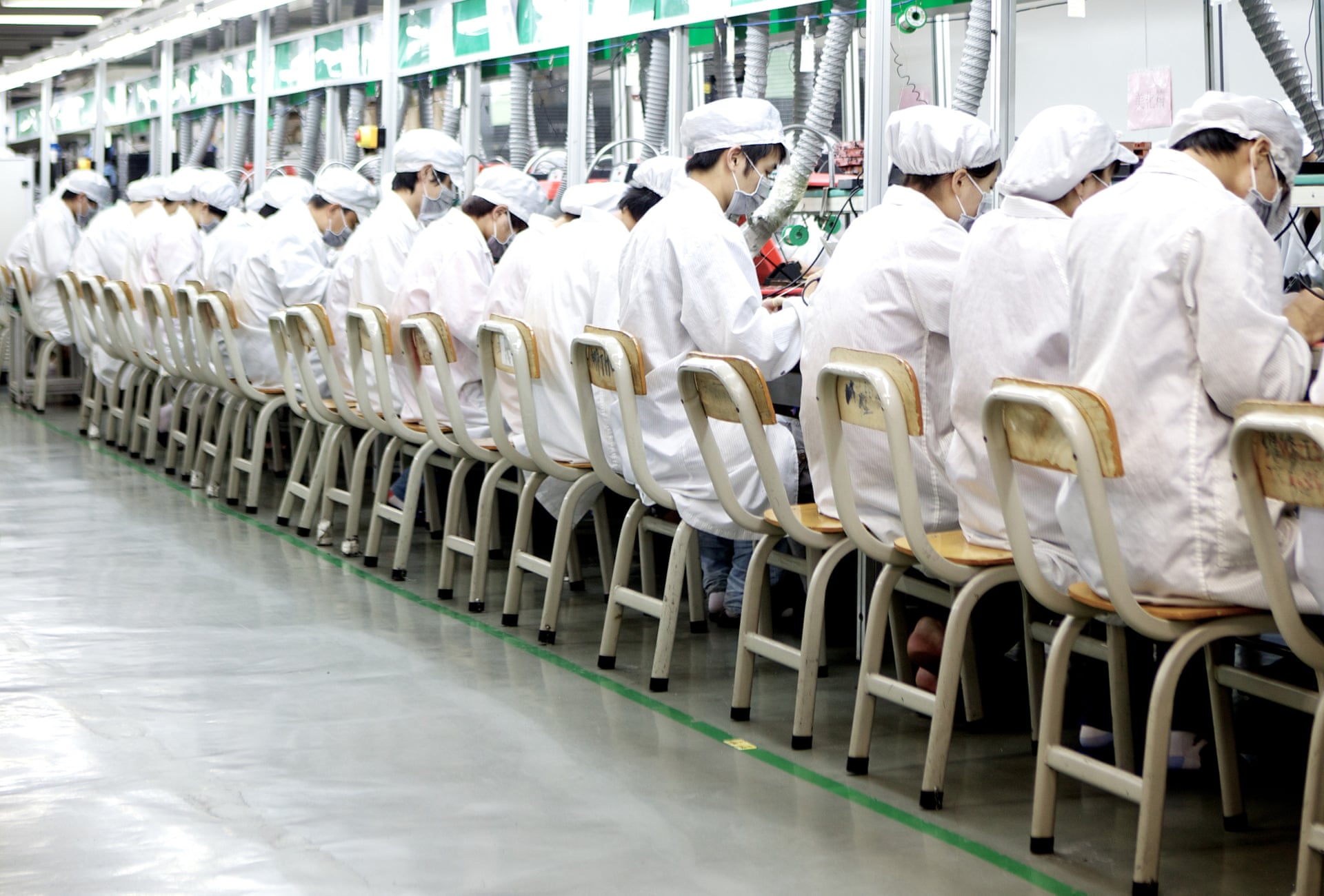
Kieu-Linh Caroline Valverde’s “Social Transformations from Virtual Communities” highlights the transformation of Vietnam’s social networking through the introduction of the internet. Popular websites, like the VNForum, were instrumental in the formation of better communication between the Vietnamese in Vietnam and the Vietnamese diaspora all over the world. This enhanced way of communication allowed for social changes, like the No-Nike campaign, to flourish and to enact change within Vietnam through global activism. With Vietnamese government officials monitoring internet use and actively participating in the forums, the people in charge of the VNForum had to be aware of the posts that would appear from people on both sides of the political spectrum, the people who supported the communist government and the people who were anticommunist and overseas. The internet allowed people to exchange ideas on how to improve Vietnam and for Vietnamese to think globally and act locally in a virtual space. This kind of social activism definitely still exists today with social injustices in places like China, being publicized through their local media and eventually spreading to global media, causing for actions like strikes and boycotts to occur in demand for better labor conditions for the workers. For example, when research and videos documenting the poor working conditions of China’s iPhone factories occurred, Apple took some precautions, though it did not spark enough outrage to warrant widespread boycotts of Apple products (Merchant). I think the reason why is because a lot of people who benefit from Apple’s products are the people who have the power to change, making it difficult for them to turn their back on something that they happen to use daily, leading them to write it off as some sort of ‘necessary evil.’
Question: Nowadays, it is both easy and difficult to rile up masses in effort to combat social injustices that occur locally and globally. What are some ways to get people to truly care about social injustices again? Do certain issues affect certain populations more? Is it based off of race? Religion? Economical status? Also, with the internet being more accessible to everyone than ever, is it fair to say that everyone is in tune to every issue that is occurring everyday with this fast news cycle? Does this fast news cycle insensitize everyone to the point of apathy?
 Source:
Merchant, Brian. “Life and Death in Apple's Forbidden City.” The Guardian, Guardian News and Media, 18 June 2017, www.theguardian.com/technology/2017/jun/18/foxconn-life-death-forbidden-city-longhua-suicide-apple-iphone-brian-merchant-one-device-extract.
Question: Nowadays, it is both easy and difficult to rile up masses in effort to combat social injustices that occur locally and globally. What are some ways to get people to truly care about social injustices again? Do certain issues affect certain populations more? Is it based off of race? Religion? Economical status? Also, with the internet being more accessible to everyone than ever, is it fair to say that everyone is in tune to every issue that is occurring everyday with this fast news cycle? Does this fast news cycle insensitize everyone to the point of apathy?
Merchant, Brian. “Life and Death in Apple's Forbidden City.” The Guardian, Guardian News and Media, 18 June 2017, www.theguardian.com/technology/2017/jun/18/foxconn-life-death-forbidden-city-longhua-suicide-apple-iphone-brian-merchant-one-device-extract.
Week 9__Anna Yang__ASA114
After the reading of Social Transformations form Visual Communities by Professor Kieu Linh Valverde, it discusses the idea of technology becoming more frequent and integrated within communities and societies. This boosts the communication between overseas diasporas and those in the home country. After the effects of the Vietnam War, many families chose to leave or stay behind after a overtake of Vietnam by communists. However, those that did settle down in America tend to have more freedom and rights as compared to their relatives back home. Through the use of forums like VNforum, overseas vietnamese people utilized this as a resource for many to gather and communicate through virtual means. This type of communication can also be seen within present day China, where many U.S social media sites are banned and therefore limit opportunities of reconnection with overseas relatives.
Q: How can the diasporas be able to improve communication within the guidelines of their country's limitation on websites?

Q: How can the diasporas be able to improve communication within the guidelines of their country's limitation on websites?

Week 9_Anna Pak_ASA114
 Beep-boop--that’s the sound of creating a new, shared hybrid culture through virtual communities such as VNForum, VNBiz, and BBS. Valverde’s chapter emphasizes the idea of “network individualism” as the “individual rising to form community” (Valverde 88) through the versatile cyberspace, specifically to affect social change and activism. A recent example of this would be the Welga Archive [created by] the Bulosan Center for Filipinx Studies (WA-BCFS). Although the archive initially focused on Filipino American labor history, its legacy is transnational with collaborations between social/political activists from Bulosan’s hometown in the Philippines and the BCFS in California. This diasporic community engages in network individualism through online archives and political/social activism, similar to the Vietnamese diaspora. In doing so, the communities create and renegotiate their various identities, including sexual identity as Tsang discusses in his chapter. I found it very intriguing when he noted how Asian males in particular could challenge stereotypes of asexuality and, by extension, other similar mindsets. However, compared to these men, how do Asian and Pacific Islander women of varying sexualities interact with cyberspace?
Works Cited:
Kieu-Linh Valverde. “Social Transformations from Virtual Communities.” Transnationalizing Viet Nam.
Daniel Tsang. “Notes on Queer ‘N’ Asian Virtual Sex.”
Image Source: https://welgadigitalarchive.omeka.net/exhibits/show/about
Week9_EmmanuelCapua_ASA114
In a journal titled, “Notes on Queer ‘N Asian Virtual Sex” written by Daniel C. Tsang, he essentially shares his observations of the gay, bisexual, and queer demographic on tthe Bulletin Board System (BBS). Some of those observations include constructing an online identity in contrast with their real one, most prominently in their ethnic/racial identification, the lack of privacy on the BBS, etc. What is particularly interesting is that most of these findings can be applied today, such as using a server to find other folks to find affection, romance, etc.
Of course, we don’t typically hear of these narratives or this diaspora within the diaspora because as Tsang states, “Gay society in North America, organized and commercial, is framed around the young middle-class white male” (Tsang p. 124). What can be interpreted from this is that in order to be identified as openly gay, it has to fall under a white narrative or perspective otherwise it doesn’t exist or it isn’t as valid. So, I would assume that BBS or other methods would allow for them to have their voices heard without the judgement. It just goes to show that a diaspora like this does exist, but because they don’t fall in line with a lot of other narratives, they become misconstrued and marginalized.
Question: Is there a broader study out there that is more updated and similar to this text written by Daniel Tsang? I think it’d be pretty interesting to see what these numbers are now especially considering today’s social climate.
Photo Source: https://www.nbcnews.com/think/opinion/looking-love-tinder-lesbians-must-first-swipe-past-parade-straight-ncna1047721
Source: Tsang, Daniel C. “Notes on Queer ‘N Asian Virtual Sex.” Amerasia Journal, vol. 20, no. 1, 1994, pp. 117–128., doi:10.17953/amer.20.1.24j7n8631p57m276.
Subscribe to:
Posts (Atom)