Friday, November 6, 2015

Week 8 Blog: Kurt Romero

In the reading, "When Minorities Migrate", Tsuda explains Japanese from Brazil migrating back to their homeland and bringing some of that culture with them. No matter where Asians migrate in the world, they will always be seen as a foreigner and in Brazil, they are called "Japones". Majority of them have a different lifestyle because when they go back to their homeland, they are seen to be "Brazilian" similar to how Asian Americans are seen when they go back to their homeland. This is because they were raised in a different environment other than their homeland. They act in a specific way and they are perceived based on their actions. In the article, it says that the Japanese enjoy the life in Brazil than back at home. The future generations as in the second or third will eventually or have already lost their Japanese custom. However, they enjoy both of their customs.

Question: Do you think Asian Americans today constantly seek a different culture to help define themselves?


Work Cited

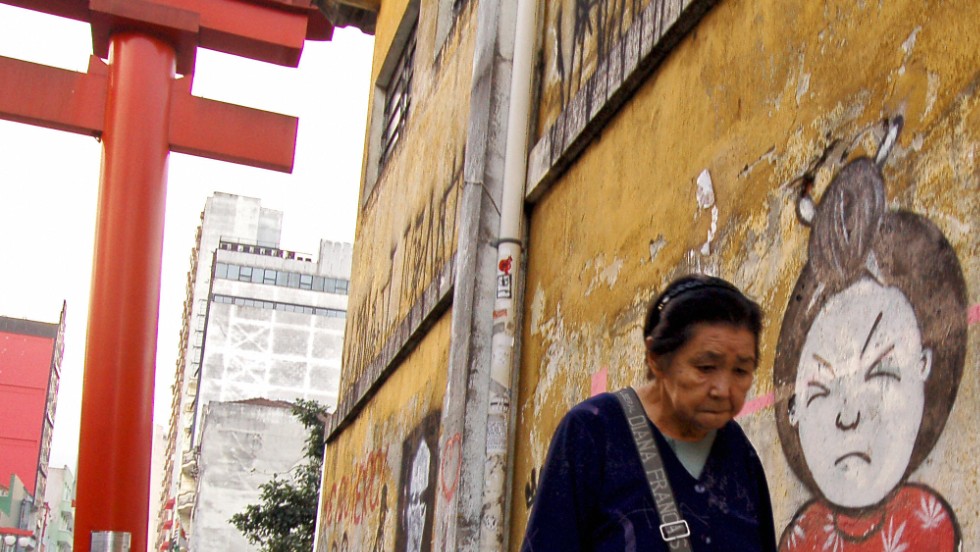
ImageLink: http://a57.foxnews.com/global.fncstatic.com/static/managed/img/fn2/feeds/Associated%20Press/2014/06/17/876/493/Brazil%20WCup%20Japanese%20Brazilians-3.jpg?ve=1&tl=1

Takeyuki (Gaku) Tsuda. "When Minorities Migrate: The Racialization of the Japanese Brazilians in
Brazil and Japan." 2007. Asian Diasporas. California: Stanford University Press.

Kevin Lee- Week 8 Blog Post

            In K. Scott Wong’s “Diaspora, Displacements, and the Construction of Transnational Identities,” he talks about transnationalism was formed through “the movement of goods, capital, people, and ideologies.” Wong states “As the globalization of capital, labor, and the movement of migrants increases, the cultural identity of those in transit and those who settle in distant lands become more fluid and decentered.” Wong also states that transnational identities are perhaps an accumulation of many needs needed to survive. I found this interesting because Wong also mentions Stuart Hall’s statement that cultural identity is a matter of becoming as well as of being. Cultural identities have histories, and these histories are what shape the lives of the people. However, due to the factors that caused transnationalism to form, the histories that come from cultural identity are constantly changing; therefore, people with transnational identities have a difficult time accepting their transnational or (multi-)cultural identities.


Question: Will transnational identities ever be fully recognized? Will people be able to fully embrace their transnational identity?


Work Cited:
Wong, K. Scott. “Diasporas, Displacements, and the Construct of Transnational Identities.”Displacements and Diasporas: Asians in the Americas. Ed. Wanni W. Anderson and Robert G. Lee. New Brunswick: Rutgers University Press, 2005. 41-53. Print.

http://www.wealthyaffiliatecentre.com/wp-content/uploads/2014/10/Marketing-Diversity-Using-Internet-Marketing-1030x641.jpg

Week 8 - Chloe Shiau

K. Scott Wong's "Diasporas, Displacements, and the Construction of Transnational Identities" shows that some huge factors that caused transnationalism were "the movement of goods, capital, people, and ideologies." Wong also explains that other countries have diasporic communities, however they are not shown in the same light as the communities in America. Places such as Brazil holds the largest population of Japanese immigrants. All of these facts show that we see the world as a transnational place. How we define ourselves is not as simple as before, because we are sharing cultures with the world. As the world becomes more connected, it becomes harder to define who you are and where you came from.

I think Wong is right about how transnationalism affects the way people define themselves now. Thinking about events such as 9/11 and FoxCon, this his how people define Islamic people and Chinese people. And how people define them affects those who are actually Islamic and Chinese. The Chinese Americans might not want to be affiliated with their culture anymore after negative news about China. As the world starts melting together in race, ethnicity, and culture, finding your identity becomes more complex.

Question: If the world is becoming more mixed together, will this eventually lead to peace or war?


Works Cited: K. Scott Wong. “Diasporas, Displacements, and the Construction of Transnational Identities.” Displacements.

http://nebode.deviantart.com/art/The-Melting-Pot-350207878

Thursday, November 5, 2015

Post Week 8 – K. Scott Wong Article

By Miggy Cruz

“Diasporas, Displacements, and the Construct of Transnational Identities” by K. Scott Wong analyzed the connectivity of the world today by discussing the evolution of immigration into a transnational and diasporic world. For example, he noted the waves of immigration beginning in the sixteenth century up until the exclusion laws were passed in 1965. Next, Wong includes four essays discussing the different lenses we could be analyzing this migration, and emigration of different groups of people to the U.S. and other host countries.  

It was interesting to find Wong’s notes on the shift to a “globalization of capitalism.” The idea is quite apparent with the idea of the passing of the TPP linking Vietnam and the U.S. In the past, much of the people from Asia emigrated to the U.S. in order to have a job to support their families back home. Today, the opposite. Jobs are being outsourced to Asian and Latin countries, but the punch line here is the lack of human right and resources available for the labor workers in those nations, who usually work under elites, large companies and industries. Additionally, I found Stuart Hall’s ideology that cultural identity “is a matter of ‘becoming’ as well as of ‘being’” very true, the reason being unless one is indigenous, we have all technically been displaced from our "homeland."

Question: What truly caused the shift from the U.S being the hub for employment, “the land of milk and honey,” to Asia now being the provider, and the U.S. the consumer?

Source:

Wong, K. Scott. “Diasporas, Displacements, and the Construct of Transnational Identities.” Displacements and Diasporas: Asians in the Americas. Ed. Wanni W. Anderson and Robert G. Lee. New Brunswick: Rutgers University Press, 2005. 41-53. Print.

http://condo.ca/immigration-more-important-for-housing-market-than-believed-cibc/


Week 8-Venice Santos

Tsudas article really stresses the idea that we brought up during discussions in class about how regardless of where an Asian immigrant is (in their country of ethnic origin or elsewhere that they reside) they will always be seen as a foreigner. In the case of Japanese Brazilians, they face an even greater sense of minority than Japanese Americans because in Brazil there is such a minimal population of Asians with non-Asian descent. Tsuda explains the socio-economic success of Japanese Brazilians to be of middle class standards as well as being educated with higher learning, but yet their continue to be seen as the minority amongst the greater population. Also as the generations integrate more into Brazilian culture, despite the older generations embracing their Japanese culture, the second and third generations have lost Japanese customs. Assimilation tends to drive the upbringing of the generations after migration. The need to blend into new societies has caused a replacement in claiming a homeland to further embrace this newer and better lifestyle. I mean isnt that the whole reason immigrants leave their countriesto seek a better life?

What will it take for immigrants to embrace both cultures as oppose to simple just assimilate? How can society be shaped to better achieve this cultural harmony?


Takeyuki (Gaku) Tsuda. When Minorities Migrate: The Racialization of the Japanese Brazilians in
Brazil and Japan. Asian Diasporas.

Image from: https://tokyoholic.files.wordpress.com/2010/09/p10703671.jpg

Week 8 Blogs: Winnie Chen


Liberdade, a central Sao Paulo neighborhood, feels more like Tokyo due to 600,000 Japanese descendants who live there.
The identities that make up a person are the differences that put them apart from people with different identities. Given the social environment and influences of their surroundings, the culture that they live in can be heavily altered by the members of the culture or by outside sources. When the definition of your identity changed due to special circumstances, you become more and more aware that these identities are actually social constructions. In Asian Diasporas, there is a specific section titled “When Minorities Migrate: The Racialization of the Japanese Brazilians in Brazil and Japan” by Takeyuki (Gaku) Tsuda, which focuses on the shift of identity based on “awareness of cultural and/or racial characteristics… [which have been] constructed in response to varying social contexts” (Tsuda 225). Due to socio-economic factors and lack of opportunity in the homeland for a certain class, Japanese farmers migrated to Brazil, and for the same factors and difficulties, Japanese Brazilians migrated to Japan. While living in Brazil with also a Japanese ethnic identity, it is interesting that there is a positive cultural meaning to “japones” and differentiating Japanese Brazilians from Brazilians was merely an act of recognizing difference, rather than ridicule. From this observation, it is clear to me how minorities are treated racially, ethnically, socially, and on many other levels not in Brazil, but rather in the United States.

Question:
What are the factors for Japanese Brazilians to choose one aspect of their ethnic identity over another when they go back and forth from being “more” Japanese or “more” Brazilian?


Works Cited:
"When Minorities Migrate: The Racialization of the Japanese Brazilians in Brazil and Japan." Asian Diasporas: New Formations, New Conceptions. Ed. Rhacel S. Parrenas and Lok C.D. Siu. Stanford UP, 2007. Print.

Aung Lin-Week 8-Blog 8

I will write this week’s blog on Tsuda’s article “When Minorities Migrate.” I love this article because it talked about how Japanese in Brazil are migrating back to Japan to make more money and they are proud to be Brazilian Japanese and showed that in many ways in Japan. I was shocked that factory workers in Japan make whole a lot more money than well-educated people in Brazil. The Japanese that migrated back to Japan did the right thing. People in Brazil would call these Japanese “japones.” Japones is a derogatory term for Brazilian Japanese. No matter how culturally Brazilian they may become, they will forever be call japones because of their physical appearance. Many Brazilian Japanese in Japan wears Brazilian clothes when they go out in public to show their cultural difference. Brazilian Japanese are much more interested in learning about Japanese culture and language compared to Japanese Americans. In a way “japones” can be a big compliment. There's a similar story that happened in class this week. We watched "Oh Saigon" and in the film Vietnamese family that escaped during the Vietnam War went back to Vietnam to visit their old family members one last time. But "Oh Saigon" is about family problems and has nothing to do with work and Tsuda's article is about moving back to home country for business not because of family problems like "Oh Siagon." 

Question:
In this article, it talked about how Japanese men don’t like facial hair. Brazilian showed his goatee as the symbol of Brazilian identity. Why does Japanese men don’t like facial hair? What is the meaning behind growing facial hair in Japanese?

Work Cited
Takeyuki (Gaku) Tsuda. When Minorities Migrate: The Racialization of the Japanese Brazilians in

Brazil and Japan. 2007. Asian Diasporas. California: Stanford University Press.

Factory workers in Japan making 5 to 10 times more money compared to educated people in Brazil